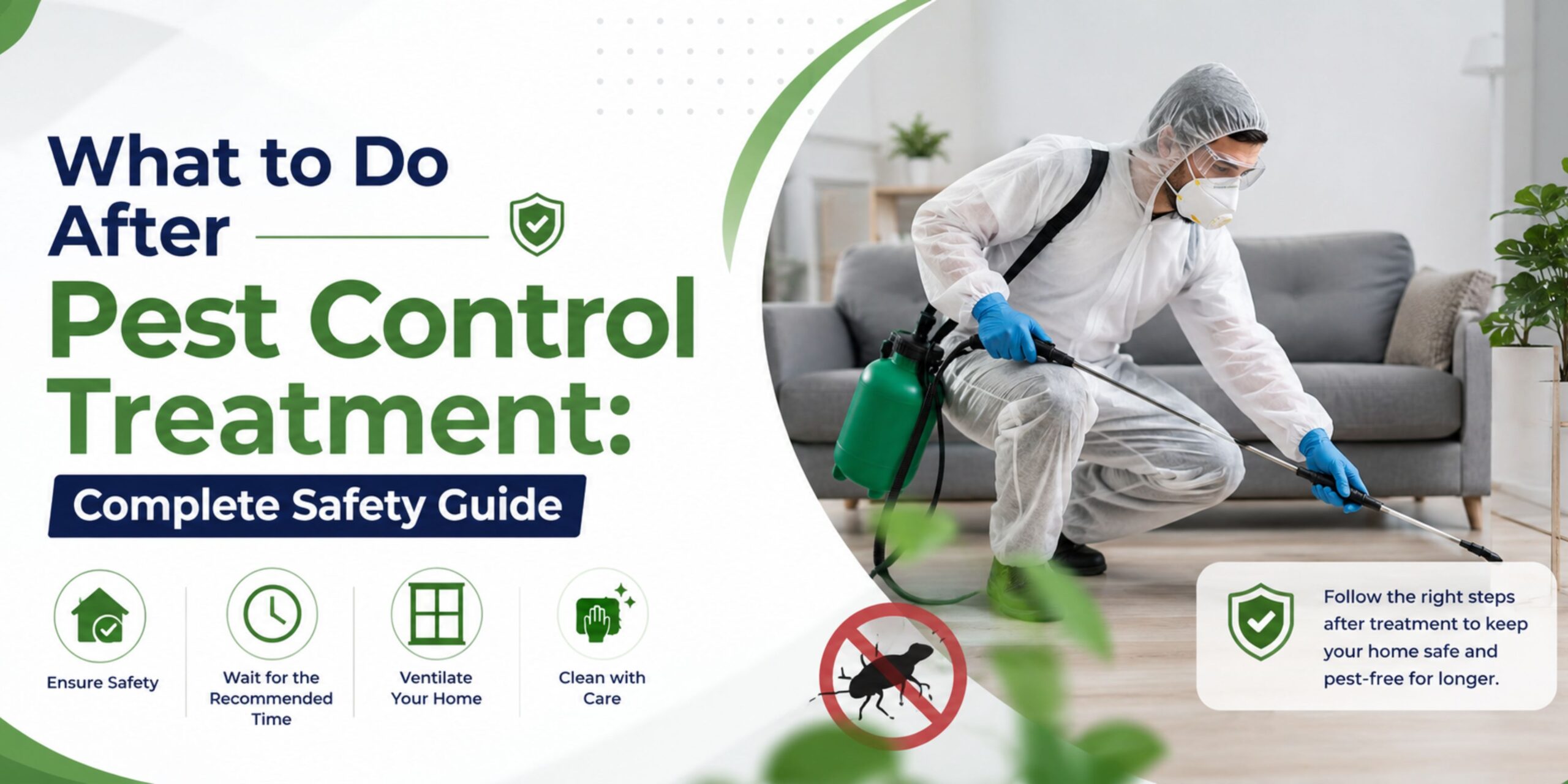
Professional pest control can help protect your home from unwanted pests such as cockroaches, termites, bed bugs, ants, mosquitoes and other common household insects. However, what you do after General Pest Control Services in Tirupati is also important.
Following the right precautions can help you stay safe, protect children and pets, maintain treated areas properly and improve the overall effectiveness of the treatment.
If you have recently booked a pest control service, you may be wondering:
How long should I stay away after pest control? Should I clean the house immediately? Can I bring children and pets back? When can I use the kitchen again?
The answers can vary depending on the pest, treatment method, and product used. Therefore, always follow the instructions provided by your pest control professional and the product label. The U.S. EPA recommends following pesticide label directions carefully and keeping children and pets away from treated areas until the specified conditions are met.
In this guide, Chinnu Pest Control explains the important things you should do after a pest control treatment.
Quick Answer: What Should You Do After Pest Control Treatment?
After pest control treatment:
- Follow the pest control professional’s re-entry instructions.
- Keep children and pets away until the recommended time has passed.
- Ventilate the treated areas when instructed.
- Avoid immediately washing treated surfaces unless advised.
- Clean food-contact surfaces before preparing food.
- Wash or replace exposed food items as appropriate.
- Monitor the house for pest activity.
- Avoid using additional pesticides without professional advice.
- Keep food, water and waste properly stored.
- Contact the pest control company if pest activity continues or you notice unexpected problems.
These steps help you maintain a safer environment while allowing the treatment to work as intended.
Why Is It Important to Follow Post-Pest-Control Instructions?
Pest control treatments are designed to target specific pests and may involve sprays, gels, baits, dusts, or other treatment methods. Each method can have different instructions for re-entry, cleaning, and ventilation.
For this reason, there is no single waiting time that applies to every pest control treatment.
A professional should explain:
- When you can safely re-enter the treated area
- Whether windows should be opened
- Which surfaces should not be cleaned immediately
- When children and pets can return
- Whether food preparation areas need additional cleaning
- Whether follow-up treatment is required
Following these instructions helps reduce unnecessary exposure and supports effective pest management.
1. Follow the Recommended Re-Entry Time
One of the first things to do after pest control is to follow the recommended re-entry time.
Do not assume that you can immediately return to the house just because the treatment is complete.
The required time can depend on:
- Type of pest
- Treatment method
- Product used
- Area treated
- Indoor or outdoor application
- Ventilation
- Instructions on the product label
If your pest control professional tells you to remain outside for a specific period, follow that instruction.
For treatments such as total-release foggers, EPA guidance specifically states that everyone, including pets, should leave the treated space and remain outside for the period specified on the label.
2. Keep Children Away From Treated Areas
Children are naturally curious and may touch floors, walls, furniture or other surfaces shortly after treatment.
Keep children away from treated areas until the recommended re-entry conditions have been met.
After returning:
- Prevent children from touching wet or recently treated surfaces.
- Keep pesticide products away from children.
- Follow any additional instructions provided by the technician.
- Clean food-contact surfaces according to the professional’s instructions.
Pesticide safety guidance recommends keeping children away from treated areas until the pesticide has dried or until the period specified by the product label has passed.
3. Keep Pets Away Until It Is Safe
Dogs, cats and other pets can come into contact with treated floors and surfaces by walking, licking or grooming themselves.
Keep pets away from treated areas until your pest control professional confirms that it is safe for them to return.
Before bringing pets back:
- Check whether treated areas are dry.
- Remove pet food and water bowls from treated areas.
- Wash bowls if they were exposed.
- Follow the technician’s instructions.
- Prevent pets from licking treated surfaces.
If you have birds, fish or other sensitive pets, ask your pest control professional about any additional precautions.
4. Ventilate Your Home When Recommended
Ventilation may be an important step after certain indoor pest control treatments.
Open doors and windows and use fans only when the treatment instructions allow it.
Good ventilation can help air out remaining fumes following treatments where ventilation is recommended. EPA guidance for certain fogging applications advises airing out treated areas after returning.
However, do not automatically ventilate every treatment. Some treatments may have specific instructions that differ.
Always follow the instructions provided for your particular treatment.
5. Do Not Immediately Wash Every Treated Surface
A common mistake after pest control is deep-cleaning the entire house immediately.
Depending on the treatment, cleaning treated surfaces too soon may reduce the effectiveness of the application.
Before cleaning:
Ask your pest control professional which areas should remain untreated or undisturbed and for how long.
You may need to clean certain areas such as:
- Kitchen counters
- Dining tables
- Food preparation surfaces
- Children’s frequently touched surfaces
- Pet feeding areas
The exact cleaning requirements depend on the treatment.
6. Clean Food Preparation Areas Carefully
Food-contact surfaces require special attention after pest control.
If kitchen counters, shelves or other food-preparation surfaces were treated or potentially exposed, follow the technician’s cleaning instructions before placing food or preparing meals.
The EPA recommends removing or covering food during indoor pesticide applications and advises cleaning surfaces that may have pesticide residues before placing food on them.
You should also:
- Store food in sealed containers.
- Wash exposed utensils before use.
- Clean food preparation surfaces as instructed.
- Keep uncovered food away from treated areas.
- Avoid placing food directly on treated surfaces.
7. Do Not Use Additional Pesticides Immediately
After professional pest control, you may still see a few pests.
This does not necessarily mean the treatment has failed.
Avoid immediately buying another pesticide and spraying the same areas yourself.
Using additional products without understanding what was already applied can create unnecessary exposure and may interfere with the treatment strategy.
Instead, contact your pest control provider and explain what you are seeing.
A professional can determine whether:
- The treatment is still working.
- The pest activity is normal after treatment.
- A follow-up visit is required.
- Additional treatment is appropriate.
8. Expect Some Pest Activity After Treatment
Many homeowners expect every pest to disappear immediately.
However, depending on the pest and treatment method, you may continue to notice some pest activity for a period after treatment.
For example, pests hiding in cracks, walls, furniture or other inaccessible areas may appear as they move through treated zones.
Instead of immediately assuming the treatment failed, monitor the situation and follow the pest control company’s instructions.
If pest activity remains high or increases, contact the service provider.
9. Keep Your Home Clean and Dry
Professional pest control works best when combined with good household hygiene and pest-prevention practices.
After treatment:
- Clean up food crumbs quickly.
- Store food properly.
- Empty garbage regularly.
- Fix leaking taps and pipes.
- Avoid standing water.
- Keep kitchens clean.
- Reduce unnecessary clutter.
- Seal cracks and gaps where pests can enter.
The EPA recommends removing food, water and shelter sources and sealing potential pest entry points as part of effective pest prevention.
10. Do Not Disturb Baits or Gel Treatments
If your pest control treatment involves gel bait or bait stations, do not remove, wash away or relocate them unless instructed by the technician.
Baits work by allowing pests to interact with the treatment and, depending on the pest and product, carry the active ingredient back to their hiding or nesting areas.
If you notice gel bait in cabinets, corners or other locations, leave it undisturbed unless your technician tells you otherwise.
Keep children and pets away from any bait that is not specifically designed to be accessible to them.
11. Monitor for Pest Activity
After treatment, regularly inspect your home.
Look for:
- Live cockroaches
- Dead insects
- Termite signs
- Ant trails
- Bed bug signs
- Mosquito activity
- Droppings
- New pest entry points
Monitoring helps you and your pest control provider understand whether further action is necessary.
For recurring infestations, follow-up treatments may sometimes be part of an overall pest-management plan.
12. Follow Up With Your Pest Control Company
If pests continue to appear, don’t ignore the problem.
Contact your pest control provider and explain:
- Which pest you are seeing
- Where you are seeing it
- How frequently you see it
- Whether the activity has increased or decreased
- How many days have passed since treatment
Your technician can then advise you on the next step.
This is especially important for pests such as termites, bed bugs and cockroaches, where complete control may require a more targeted or repeated approach.
What Should You Avoid After Pest Control?
Here are some common mistakes to avoid.
Don’t enter the treated area too early
Wait until the recommended re-entry time has passed.
Don’t let children or pets enter too soon
Follow the professional’s instructions regarding children and pets.
Don’t immediately deep-clean everything
Cleaning too soon may interfere with some treatments.
Don’t spray another pesticide yourself
Speak with the pest control provider first.
Don’t place food on treated surfaces
Clean food-contact surfaces according to the treatment instructions.
Don’t ignore continuing pest activity
Contact your pest control company if the infestation continues.
Don’t assume more pesticide means better results
Pesticides should always be used according to their directions. The EPA specifically warns against using more pesticide than directed.
How to Keep Your Home Pest-Free After Treatment
Pest control should not be viewed as a one-time solution without prevention.
Once treatment is completed, take steps to reduce the conditions that attract pests.
Seal Entry Points
Inspect:
- Doors
- Windows
- Pipes
- Drains
- Wall cracks
- Baseboards
- Ventilation openings
Seal gaps where appropriate to reduce pest entry.
Remove Food Sources
Keep food in sealed containers and clean food spills quickly.
Reduce Moisture
Fix leaks and avoid allowing water to accumulate.
Manage Waste
Keep garbage bins covered and dispose of food waste regularly.
Reduce Clutter
Cardboard boxes, newspapers and clutter can provide hiding places for some pests.
Maintain Outdoor Areas
Keep vegetation, waste and standing water under control around the property.
These prevention measures are consistent with integrated pest-management principles that focus on reducing food, water and shelter available to pests.
When Should You Contact a Pest Control Professional Again?
You should consider contacting your pest control provider when:
- Pest activity remains high after treatment.
- You continue seeing termites.
- Cockroaches remain active.
- Bed bug signs continue.
- Mosquito activity remains excessive.
- Ant infestations return.
- You discover new pest entry points.
- You are unsure whether a follow-up treatment is needed.
Professional assessment is particularly useful when pests are hidden or difficult to identify.
Frequently Asked Questions About What to Do After Pest Control
How long should I stay away after pest control treatment?
The required waiting period depends on the treatment method and product used. Follow the exact re-entry instructions provided by your pest control professional and the product label.
Can I clean the house immediately after pest control?
Not necessarily. Cleaning treated surfaces too soon may reduce the effectiveness of some treatments. Ask your technician which areas can be cleaned and when.
Is pest control safe for children?
Professional pest control can be performed with safety precautions, but children should remain away from treated areas until the recommended re-entry conditions have been met. Always follow the product label and professional instructions.
Is pest control safe for pets?
Pets should be kept away from treated areas until the pest control professional confirms that it is safe for them to return. Additional precautions may apply depending on the treatment and type of pet.
Should I open windows after pest control?
Ventilation may be recommended for certain treatments, but it is not appropriate to assume the same procedure applies to every treatment. Follow the instructions provided by your pest control professional.
Can I see cockroaches after pest control?
Yes, you may still notice some pest activity after treatment. Monitor the situation and contact your pest control provider if activity remains high or does not improve.
What should I do if pests return after treatment?
Contact the pest control company and provide details about the pest activity. The technician can determine whether monitoring, follow-up treatment or another approach is needed.
How can I prevent pests after pest control?
Keep your home clean and dry, store food properly, remove waste regularly, reduce clutter and seal potential entry points. Preventing access to food, water and shelter can reduce the likelihood of future infestations.