Termites can remain hidden while damage develops, so seeing live termites is not the only warning sign homeowners should watch for. Mud tubes, hollow or damaged wood, discarded wings, termite droppings, swarming activity, unusual changes in wood surfaces and unexplained changes to wooden fixtures can all justify further investigation.
However, one sign does not automatically prove that an active termite infestation exists. Some signs have alternative explanations, such as moisture damage, wood decay or other insects. Confirmation may require a closer inspection by a qualified pest-control professional.
The important point is not to ignore repeated or unexplained evidence.
Quick Answer: What Are the Warning Signs of Termites?
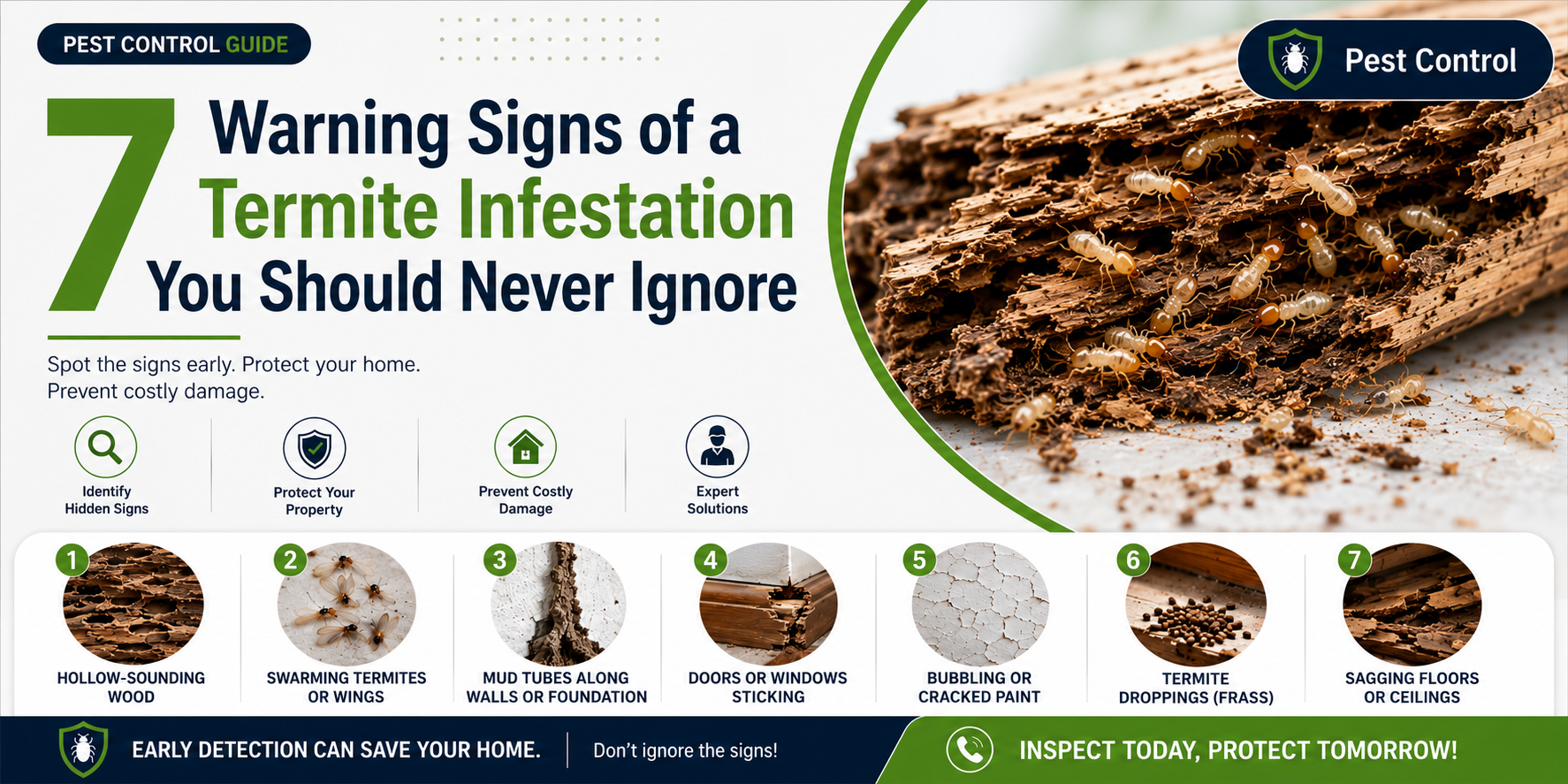
The seven warning signs covered in this guide are:
- Mud tubes or shelter tubes on walls, foundations or wood
- Hollow-sounding or weakened wood
- Discarded wings near windows, doors or light sources
- Small droppings or frass around wooden areas
- Swarming termites or winged insects
- Cracked, blistered or unusual wood surfaces
- Doors, windows or wooden fixtures becoming difficult to operate
Termites can be difficult to spot because workers often remain concealed. Penn State Extension notes that workers are seldom seen unless a termite tube or infested wood is disturbed, while the EPA also explains that many property owners do not realise they have termites until a swarm or damage is discovered.
1. Mud Tubes Appearing on Walls, Foundations or Wood
One of the more recognisable signs of possible subterranean termite activity is a mud or shelter tube.
These tubes are constructed from soil and other material and can provide termites with a protected route between their colony and a food source. They may appear along foundations, walls, wooden structures or concealed routes.
You may notice them:
- Along external walls
- Near foundations
- Around cracks or openings
- Near wooden structures
- Around areas where wood meets soil
- Along concealed routes between the ground and a structure
Subterranean termites commonly use these protected tubes because they need suitable moisture conditions while travelling between their colony and food source.
Does a mud tube always mean active termites?
Not necessarily.
A tube is an important reason to investigate, but an old or abandoned tube does not by itself prove that termites are currently active. EPA guidance and pest-management resources distinguish between evidence of past activity and confirmation of current activity.
If you discover a mud tube, photograph it and note where it is located. Avoid assuming that it is harmless simply because you do not immediately see termites.
2. Wood Sounds Hollow or Feels Weaker Than Expected
Termites can feed inside wood, meaning the external surface may initially appear relatively normal while internal passages develop.
This can produce wood that sounds hollow or feels weaker than expected.
Potential areas to check visually include:
- Door frames
- Window frames
- Wooden furniture
- Cabinets
- Skirting boards
- Flooring
- Wooden structural components
Penn State Extension describes termite-damaged wood as containing passages that can leave the material substantially hollowed out.
The important limitation is that hollow-sounding wood is not proof of termites. Internal decay and other forms of deterioration can produce similar changes.
If several unusual signs occur together—for example, hollow-sounding wood plus mud tubes or discarded wings—the reason for the damage deserves closer attention.
3. Discarded Wings Near Windows, Doors or Light Sources
Termite colonies can produce winged reproductive termites known as swarmers. After swarming, these insects can shed their wings.
You may find discarded wings:
- On window sills
- Near doors
- Around light sources
- On balconies
- Near entry points
- Around areas where winged insects were recently observed
Penn State Extension notes that termite wings are shed shortly after swarming and that discarded wings can sometimes be the only visible evidence of termites in a building.
But identification matters.
Winged ants can look similar to termite swarmers. Termites generally have straight antennae, a broad waist and four wings of roughly equal length, whereas winged ants have a constricted waist, bent antennae and forewings that differ from their hind wings.
So if you find wings but no insects, do not automatically diagnose termites. Treat the discovery as a reason to investigate further.
4. Small Droppings or Frass Near Wooden Areas
Small piles of granular material near wood can sometimes be associated with termites, particularly certain drywood termite infestations.
This material is commonly referred to as frass or termite droppings.
You may notice it:
- Beneath wooden furniture
- Around damaged wood
- Near small openings in wooden surfaces
- On floors beneath affected timber
- Around other areas where wood damage is suspected
However, frass is not unique to termites. Other wood-damaging insects can leave sawdust-like or granular material as well. EPA material on integrated pest management specifically notes that wood-boring insects can produce similar-looking debris.
This is why the appearance of a small pile of particles should not be treated as a confirmed diagnosis.
If you repeatedly find unexplained material around wooden areas, photograph it and have the source identified rather than assuming it is definitely termite frass.
5. Swarming Termites or Winged Insects Around Your Property
A termite swarm can be an important warning sign.
During swarming, winged reproductive termites leave a mature colony and attempt to establish new colonies. Homeowners may notice winged insects around windows, doors, lights or other sources of light.
Swarmers are often much easier to notice than termite workers because the workers generally remain concealed.
If you find:
- A group of winged insects indoors
- Repeated winged-insect activity
- Large numbers of discarded wings
- Winged insects emerging from a particular area
- Swarming activity combined with other termite evidence
it is worth investigating.
Are all flying insects termites?
No.
Winged ants and other insects can be mistaken for termite swarmers. Identification should therefore be based on physical characteristics rather than simply the presence of wings.
Do not rely on a generic “flying insect = termite” rule.
6. Cracked, Blistered or Unusual Wood Surfaces
Termite activity can sometimes cause visible changes to wood.
These may include:
- Blistering
- Bubbling or raised surfaces
- Uneven areas
- Thin or damaged wood
- Small holes
- Unusual surface deterioration
The EPA also identifies changes such as swelling, bending and spots that resemble water damage among possible signs requiring investigation.
But this is another area where homeowners should avoid self-diagnosing.
Similar changes can result from:
- Moisture
- Wood rot
- Age
- Humidity
- Poor installation
- Other wood-damaging insects
For example, a swollen wooden door near a damp bathroom does not automatically indicate termites.
The combination of evidence matters.
7. Doors, Windows or Wooden Fixtures Suddenly Become Difficult to Open
A door that previously operated normally but suddenly begins sticking may deserve attention, particularly if the change is unexplained.
Potentially affected items include:
- Door frames
- Window frames
- Wooden cupboards
- Flooring
- Skirting
- Wooden furniture
However, sticking doors and windows are not automatically caused by termites.
Changes in humidity, moisture, structural movement, swelling or installation problems can also affect wooden components.
The concern increases when this change occurs alongside other warning signs, such as mud tubes, damaged wood, discarded wings or unexplained debris.
In other words, do not treat a sticking door as a termite diagnosis. Treat it as one piece of information that may justify further investigation.
Can You Have Termites Without Seeing Them?
Yes.
In fact, not seeing termites does not necessarily mean that there is no termite activity.
Subterranean termites can travel through soil and protected tubes, while termite activity can also occur inside concealed areas of a structure. Workers generally avoid light and may remain hidden inside colonies, tubes or infested wood.
Potential concealed areas include:
- Wall cavities
- Foundations
- Soil beneath or around structures
- Wooden structural components
- Furniture
- Areas behind fixtures
- Other protected spaces
This is why visible insects are only one possible clue.
If you find other evidence—especially repeated evidence—professional inspection can help determine whether there is an active infestation or whether the damage has another explanation.
Termite Damage vs Normal Wood Damage
Not every unusual change in wood is caused by termites.
| Possible Sign | Other Possible Explanation |
| Hollow-sounding wood | Internal decay or deterioration |
| Mud-like tubes | Old/inactive termite tubes or other environmental debris |
| Discarded wings | Winged ants or other insects |
| Blistered wood | Moisture, swelling or deterioration |
| Small holes | Other insects or general wood damage |
| Sticking doors | Humidity, swelling or structural movement |
| Small particles near wood | Termite frass, beetle debris or other material |
This distinction is important because unnecessary treatment can be costly, while overlooking genuine termite activity can allow damage to continue.
The safest approach is to treat unexplained evidence as a reason for investigation rather than an automatic diagnosis.
Where Should Homeowners Check for Termite Signs?
You do not need to dismantle walls or structural components to start looking for possible warning signs.
Inside the Home
Pay attention to:
- Door frames
- Window frames
- Skirting boards
- Wooden furniture
- Cupboards
- Flooring
- Storage areas
- Damp or moisture-prone locations
Look for unusual changes rather than trying to force open or dismantle components.
Outside the Home
Check accessible areas around:
- Foundations
- Garden structures
- Stored timber
- Wooden fences or features
- Cracks near walls
- Areas where soil meets wood
- Moisture-prone areas
- Wood debris close to the property
The EPA recommends reducing conditions that can provide termites with access or favourable moisture, including leaks, foundation openings and wood debris close to structures.
Why Early Termite Detection Matters
Termite damage can develop without obvious surface evidence.
Because termites may remain concealed, a property owner may notice the problem only after damage becomes more apparent. The EPA notes that many people do not realise they have termites until a swarm or damage is discovered.
Early attention matters because it gives you an opportunity to determine:
- Whether termites are actually present
- Whether activity appears active or historical
- Which areas may be affected
- Whether moisture or access conditions are contributing
- What treatment, if any, is appropriate
This does not mean every suspected termite sign is an emergency.
It means unexplained or repeated evidence should not simply be ignored.
What Should You Do If You Find Termite Signs?
If you notice possible termite evidence, take a structured approach.
Step 1: Document What You Found
Take clear photographs and note:
- Where the sign appeared
- When you first noticed it
- Whether it has changed
- Whether you have found similar signs elsewhere
Photographs can help when discussing the issue with a professional.
Step 2: Do Not Disturb the Area Unnecessarily
If professional inspection is being considered, avoid immediately destroying every piece of evidence.
For example, if you discover a suspicious tube, photograph it before disturbing it.
Step 3: Check Nearby Areas
Look for additional evidence around the same room, wall, wooden fixture or accessible external area.
Multiple related signs provide more useful information than one isolated observation.
Step 4: Look for Moisture or Access Issues
Check for obvious leaks, damp areas and accessible wood-to-soil contact where practical.
Do not dismantle structural components or carry out invasive inspections yourself.
Step 5: Consider Professional Inspection
If multiple signs are present, the damage is increasing or the source is unclear, a professional assessment can help distinguish termite activity from other causes.
Can DIY Termite Treatment Solve the Problem?
Homeowners can take sensible preventive measures themselves.
These include:
- Reducing unnecessary moisture
- Fixing plumbing leaks
- Improving ventilation where appropriate
- Removing unnecessary wood debris
- Storing timber appropriately
- Reducing direct soil-to-wood contact where practical
- Sealing suitable cracks and gaps
- Keeping accessible areas around the property easier to inspect
The EPA recommends maintaining dry conditions around foundations, fixing leaks, reducing access points and avoiding wood debris next to the structure as part of termite prevention.
However, prevention is different from treating an established infestation.
If termites are actively damaging a structure, applying a random DIY pesticide is not necessarily an appropriate solution. Product labels, application requirements and safety considerations vary.
Do not use professional-use termite chemicals without the appropriate training or authorisation, and do not attempt to create your own pesticide mixtures.
When an established infestation is suspected, professional assessment is the safer way to determine what is actually happening and what treatment is appropriate.
When Should You Call a Professional?
Professional assessment is particularly worth considering when:
- Multiple termite signs are present.
- Mud tubes are visible.
- A swarm has occurred inside or immediately around the property.
- Damage appears to be increasing.
- Several wooden areas are affected.
- DIY attempts have not resolved the concern.
- The source of the damage is unclear.
- You are purchasing a property and have termite concerns.
- Structural wooden components may be affected.
A professional inspection can help answer an important question that homeowners cannot always answer from a single visible sign:
Is this active termite activity, previous damage, moisture damage or another wood-related problem?
That distinction matters because treatment should be based on the actual cause.
How Professional Termite Inspection and Treatment Works
The exact process varies according to the property, termite situation and service provider. A professional approach may involve several stages.
1. Inspection
The property is assessed for visible and potential termite activity.
This can include accessible wooden components, foundations, likely entry points and other areas where signs have been noticed.
2. Assessment
The inspection findings are considered together to determine likely infestation areas and contributing conditions.
The goal is not simply to find one damaged piece of wood but to understand the wider situation.
3. Treatment Planning
If active termites are confirmed, an appropriate treatment approach can be selected based on the property and infestation.
Different termite situations may require different treatment strategies.
4. Treatment
Professional treatment is carried out using suitable methods and products according to the assessment and applicable safety requirements.
Homeowners should ask what areas will be treated and what preparation or precautions are required.
5. Monitoring or Follow-Up
Some termite situations may require monitoring or additional treatment.
There is no responsible universal number of visits or guaranteed treatment duration that applies to every property.
Ask the provider what follow-up arrangements apply to your particular situation.
For homeowners who need professional assistance, General Pest Control has a dedicated professional termite control service.
Termite Prevention Tips
Prevention cannot guarantee that termites will never appear, but it can reduce conditions that may make a property more attractive or accessible to them.
Fix Plumbing Leaks
Address leaking pipes, taps and other moisture sources promptly.
Control Excess Moisture
Keep moisture-prone areas as dry as reasonably possible and maintain appropriate drainage.
Avoid Unnecessary Wood-to-Soil Contact
Where practical, avoid direct contact between wooden components and soil.
Store Timber Carefully
Do not leave unnecessary timber or wood debris immediately beside the property.
Keep Inspection Areas Accessible
Avoid creating unnecessary clutter around foundations and other areas where signs may need to be checked.
Remove Dead Wood and Debris
Where appropriate, remove unnecessary wood debris from around the property.
Inspect Wooden Areas Periodically
Look for changes in doors, frames, cupboards, skirting, furniture and other accessible wooden components.
Act on Early Signs
If you notice repeated or unexplained termite indicators, investigate them rather than waiting for visible damage to become extensive.
Termite Warning Signs Homeowners in Tirupati Should Watch For
Homeowners and property owners in Tirupati may encounter termite concerns in a variety of settings, including:
- Apartments
- Independent houses
- Villas
- Older residential properties
- Renovation projects
- Properties with extensive wooden furniture
- Moisture-prone areas
The same basic principle applies regardless of property type: an unusual mark, damaged piece of wood or insect sighting should be assessed in context rather than automatically labelled as termite activity.
For example, a damaged wooden door in an older home may have several possible causes. Likewise, moisture around a bathroom can produce wood changes that resemble pest damage.
On the other hand, repeated evidence such as mud tubes, discarded wings and unexplained wood damage deserves more attention.
The goal is to identify the actual cause before deciding whether treatment is necessary.
Found Possible Termite Signs in Your Tirupati Property?
If you have found several possible termite warning signs, the next useful step is confirmation.
A professional inspection can help determine whether the evidence points to active termites, previous activity, moisture damage or another cause. It can also help identify areas that may need attention.
Chinnu Pest Control provides a dedicated termite control service for property owners who need professional termite assessment and treatment.
If you are unsure what the signs around your property mean, you can contact Chinnu Pest Control to discuss the issue and ask about an appropriate assessment or quotation.
The goal should not be to treat every unusual piece of wood as a termite infestation. It should be to identify the problem accurately and act appropriately when genuine termite activity is found.
Frequently Asked Questions
What are the first signs of termites in a house?
Possible early warning signs include mud tubes, discarded wings, unusual wood damage, hollow-sounding wood, swarming activity and unexplained debris near wooden areas. A single sign does not automatically confirm an active infestation.
How can I tell if wood has termite damage?
Termite-damaged wood can contain internal passages and may sound hollow or appear weakened. However, decay, moisture and other wood-damaging organisms can cause similar symptoms, so visible damage alone is not a definitive diagnosis.
What do termite mud tubes look like?
They are generally narrow, soil-like or mud-like structures that termites construct as protected routes. They may appear on foundations, walls or wooden structures. A tube should be investigated rather than automatically assumed to contain active termites.
Are discarded wings a sign of termites?
They can be. Winged termites shed their wings after swarming, and discarded wings may be an important clue. However, winged ants can look similar, so identification is important.
Can termites live inside walls?
Termite activity can occur in concealed parts of structures, including areas that are not directly visible. Subterranean termites may travel through soil and protected routes, while termite activity can also affect concealed wooden components.
Can termites damage a house without being seen?
Yes. Termite workers often remain hidden, and damage can develop internally before it becomes obvious on the surface.
Can I treat termites myself?
Homeowners can take preventive measures such as fixing leaks, reducing moisture and removing unnecessary wood debris. An established infestation may require professional assessment and treatment. Do not use professional-use pesticides or improvised chemical mixtures yourself.
When should I call a professional termite-control company?
Consider professional assessment when multiple warning signs are present, mud tubes or swarming have been observed, damage is increasing, several wooden areas are affected or the cause of the damage remains unclear.
How long does termite treatment usually take?
There is no single timeframe that applies to every infestation. Treatment duration and follow-up requirements depend on the property, termite situation and treatment approach.
How much does termite control cost in Tirupati?
There is no universal price that can accurately represent every property. Cost can vary according to the infestation, property, treatment scope and service requirements. A property-specific assessment and quotation are more useful than an unsupported generic price.
Final Takeaway
Termites do not always announce themselves by appearing visibly on your walls or furniture.
Sometimes the first clue is a mud tube. Sometimes it is discarded wings near a window. In other cases, the warning sign may be wood that has become unusually weak, damaged or difficult to explain.
The important distinction is that possible termite evidence is not the same as a confirmed diagnosis.
If you notice one unusual sign, investigate it. If you find several signs together, if the damage is increasing, or if you cannot determine the cause, consider professional inspection.
Early investigation can help you understand whether you are dealing with active termites, previous damage, moisture or another problem—and that information is much more useful than simply guessing.
For property owners in Tirupati who need professional assistance after finding possible termite signs, Chinnu Pest Control’s termite control service is the relevant next step.