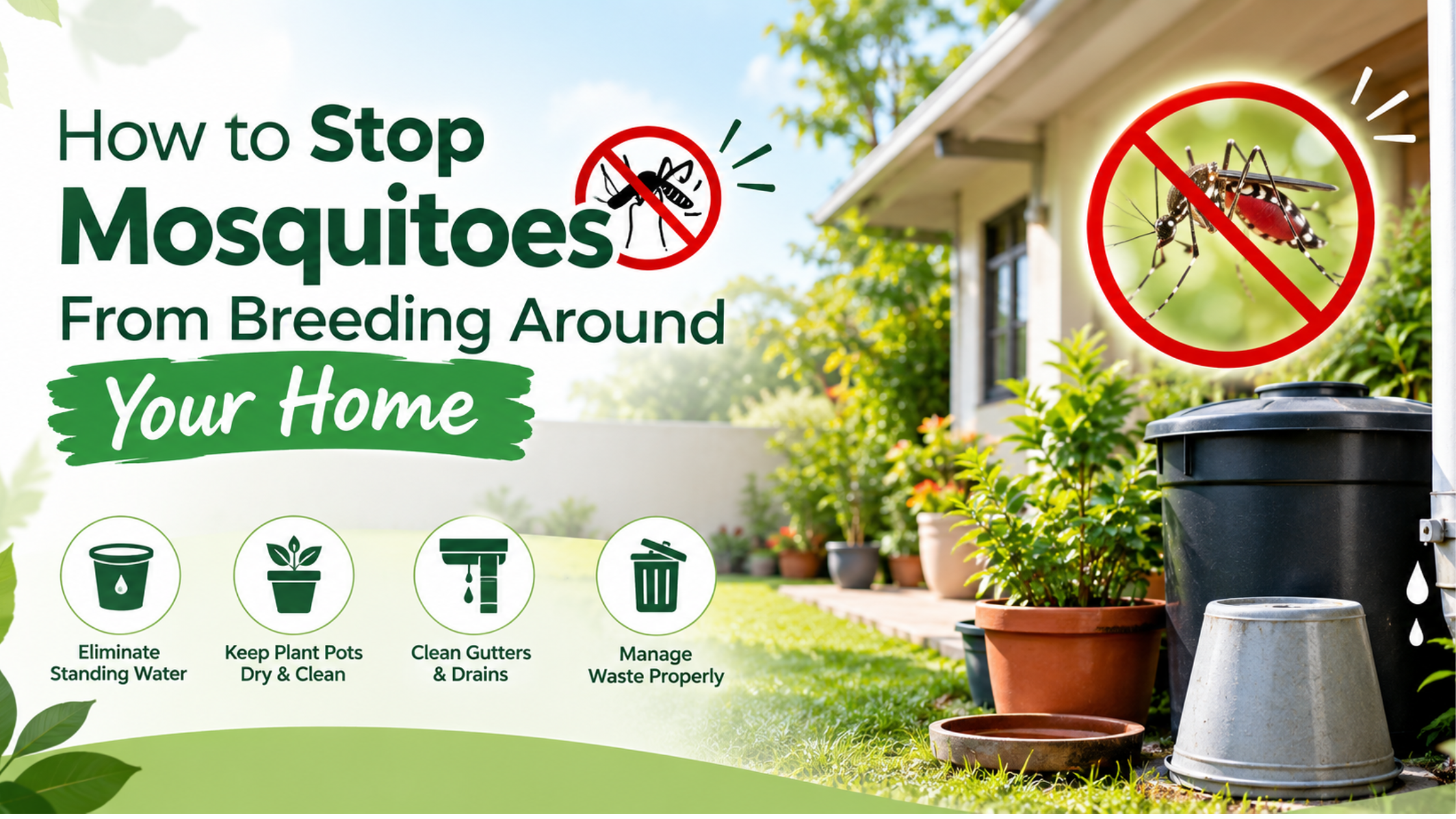
Mosquitoes can become a nuisance around homes, especially when stagnant water is available in gardens, balconies, terraces, drains, containers and other outdoor areas. The good news is that many mosquito breeding spots can be reduced with regular inspection and simple preventive measures.
Mosquitoes lay eggs in or around water, and even relatively small amounts of standing water can become a breeding site. The CDC recommends regularly emptying, scrubbing, covering, turning over or disposing of items that collect water around the home.
If mosquitoes continue to appear despite regular cleaning, professional mosquito pest control can help identify breeding and resting areas and apply appropriate control measures.
Why Do Mosquitoes Breed Around Homes?
Mosquitoes need water during important stages of their life cycle. Water collected in everyday objects can therefore become a potential breeding location.
Common sources include:
- Flower-pot trays and saucers
- Buckets and unused containers
- Old tyres
- Open water tanks
- Plastic sheets and covers
- Clogged gutters
- Birdbaths
- Unused swimming pools
- Children’s toys left outdoors
- Drainage areas
- Puddles around the property
- Construction materials that collect rainwater
The EPA notes that mosquito breeding can occur in places ranging from gutters and buckets to plant trays, tyres and other water-holding containers.
Important: You do not need a large pond for mosquitoes to breed. Small pockets of stagnant water can also create suitable breeding conditions.
10 Ways to Stop Mosquitoes From Breeding Around Your Home
1. Remove Standing Water Every Week
Walk around your property at least once a week and look for containers holding water.
Empty water from:
- Buckets
- Plant trays
- Toys
- Outdoor containers
- Birdbaths
- Unused pots
- Small pools
After emptying containers, clean them where appropriate because mosquito eggs can remain attached to surfaces.
The CDC specifically recommends a weekly routine of emptying, scrubbing, turning over, covering or throwing away items that can hold water.
2. Keep Water Storage Containers Covered
If you store water in buckets, drums, tanks or other containers, keep them tightly covered.
An uncovered container can provide mosquitoes with easy access to water.
For containers that cannot be completely covered, suitable mesh can help prevent mosquitoes from entering.
3. Check Plant Pots and Garden Areas
Gardens and balconies can contain several hidden mosquito breeding spots.
Check:
- Plant saucers
- Decorative pots
- Watering cans
- Garden buckets
- Outdoor furniture
- Plastic sheets
- Drainage areas
Avoid allowing water to remain in plant trays for extended periods.
4. Clean Roof Gutters and Drainage Areas
Blocked gutters can collect rainwater and organic debris.
Regularly inspect:
- Roof gutters
- Downpipes
- Terrace drains
- Outdoor drains
- Water outlets
- Low-lying areas
Keeping drainage systems clear helps prevent water from remaining stagnant. The EPA recommends keeping roof drains, downspouts and gutters open and free-flowing.
5. Do Not Leave Old Tyres Outside
Old tyres are easy to overlook but can collect rainwater.
If tyres are no longer required, dispose of them properly. If they must be stored, keep them under suitable cover so they cannot collect water.
Old tyres are specifically identified by public-health agencies as potential mosquito breeding sites.
6. Maintain Your Swimming Pool
Swimming pools should be properly maintained and water should not be allowed to become stagnant.
Pay particular attention to:
- Pool covers
- Unused pools
- Small inflatable pools
- Poolside containers
- Water collected on covers
The EPA recommends keeping swimming-pool water treated and circulating.
7. Check Your Terrace After Rain
After rainfall, inspect the terrace carefully.
Look for water collected in:
- Construction materials
- Plastic sheets
- Broken pots
- Containers
- Drainage corners
- Equipment covers
Even when the main terrace appears dry, small pockets of water may remain in corners or objects.
8. Prevent Mosquitoes From Entering Your Home
Stopping breeding around your property is important, but preventing mosquitoes from entering the house also helps.
You can:
- Repair damaged window screens
- Keep doors closed where practical
- Use properly fitted screens
- Check ventilation openings
- Avoid leaving water-filled containers indoors
The CDC recommends maintaining window and door screens and reducing places where mosquitoes can enter or lay eggs indoors.
9. Remove Water From Unused Items
Outdoor items can unexpectedly collect rainwater.
Check:
- Toys
- Tarpaulins
- Plastic covers
- Empty bottles
- Cans
- Buckets
- Furniture
- Gardening equipment
The EPA recommends removing standing water from items that can become mosquito habitats.
10. Consider Professional Mosquito Pest Control
If mosquitoes remain a problem after removing standing water, the source may not be obvious.
Professional pest-control technicians can inspect areas around the property and identify potential breeding or resting locations. Depending on the situation, mosquito-control programs can involve measures targeting larvae and adult mosquitoes.
For persistent mosquito problems, professional pest control in Tirupati can be considered along with regular source reduction.
What Are the Common Signs of a Mosquito Breeding Area?
You may need to inspect your property more closely if you notice:
- Increasing mosquito activity around your home
- Mosquitoes repeatedly appearing in the same outdoor area
- Stagnant water around drains or containers
- Water collecting after rainfall
- Larvae or wriggling organisms in stagnant water
- Large numbers of mosquitoes around shaded, humid areas
Finding the source is important because simply killing adult mosquitoes may not address the breeding location.
Why Does Mosquito Control Sometimes Fail?
One common reason is that only adult mosquitoes are being targeted while breeding sources remain.
For example, spraying an area may temporarily reduce adult mosquitoes, but if stagnant water remains nearby, new mosquitoes can continue developing.
Effective mosquito management therefore involves a combination of:
Remove breeding sites → Reduce larvae → Prevent entry → Control adult mosquitoes when necessary
The CDC describes mosquito control as involving measures such as removing standing water and, where appropriate, controlling larvae and adult mosquitoes.
How Often Should You Check for Mosquito Breeding?
A weekly inspection is a practical routine for most homes.
After heavy rainfall, it is also useful to check outdoor areas because new containers, puddles and other water-holding spots may have appeared.
Pay special attention to:
Terrace → Balcony → Garden → Drains → Plant pots → Water storage → Outdoor containers
Regular source reduction can prevent many potential breeding sites before they become a larger problem.
Can Professional Pest Control Completely Prevent Mosquitoes?
Professional pest control can help reduce mosquito populations, but no treatment should be presented as a permanent guarantee.
Mosquitoes can return when new breeding conditions develop, particularly when standing water is repeatedly introduced by rain, irrigation, poor drainage or uncovered containers.
For this reason, professional treatment works best when combined with regular property maintenance and elimination of mosquito breeding sites.
When Should You Call a Pest Control Professional?
Consider professional mosquito control when:
- Mosquito activity remains high despite removing standing water
- Your property has persistent drainage problems
- Mosquitoes are coming from difficult-to-access areas
- You manage a large residential or commercial property
- You repeatedly experience mosquito infestations
- You need help identifying hidden breeding locations
A professional inspection can help identify areas that may be difficult for homeowners to notice.
Mosquito Control in Tirupati
Homes and businesses in Tirupati can benefit from regular mosquito-prevention measures, particularly around outdoor areas where water can accumulate.
If you are experiencing persistent mosquito problems, professional mosquito pest control in Tirupati can help identify potential breeding and resting areas and determine an appropriate treatment approach.
Instead of relying only on mosquito repellents or temporary solutions, controlling the source is an important part of long-term mosquito management.
Looking for mosquito pest control services in Tirupati? Contact Chinnu Pest Control for professional assistance with mosquito-related pest problems.
Frequently Asked Questions
How can I stop mosquitoes from breeding around my house?
Remove standing water from containers, plant trays, tyres, gutters, pools and other areas at least once a week. Keep water-storage containers covered and maintain proper drainage.
Can mosquitoes breed in small amounts of water?
Yes. Some mosquito species can use surprisingly small water-holding containers as breeding sites. This is why regularly checking small containers, plant trays and outdoor objects is important.
How often should I remove standing water?
Check your property at least once a week and after rainfall. Regularly emptying and cleaning water-holding containers helps reduce potential breeding sites.
Do mosquito repellents stop mosquitoes from breeding?
No. Repellents are intended to help prevent mosquito bites; they do not eliminate breeding sites. Removing standing water addresses the source of mosquito breeding.
Why are mosquitoes still present after spraying?
Spraying can reduce adult mosquitoes, but mosquitoes may return if breeding sites remain. Effective control should also address standing water and other conditions that allow mosquitoes to reproduce.
Can mosquitoes breed in plant pots?
Yes. Water collected in plant trays and saucers can become a mosquito breeding site. Empty and clean them regularly.
Is professional mosquito control necessary?
Not every mosquito problem requires professional treatment. However, professional assistance can be useful when mosquito activity remains high despite removing standing water or when breeding areas are difficult to identify.
What is the best way to prevent mosquitoes at home?
The most important step is to remove or prevent standing water. Combine this with covered water storage, clean drainage, window and door screens, and professional control when necessary.