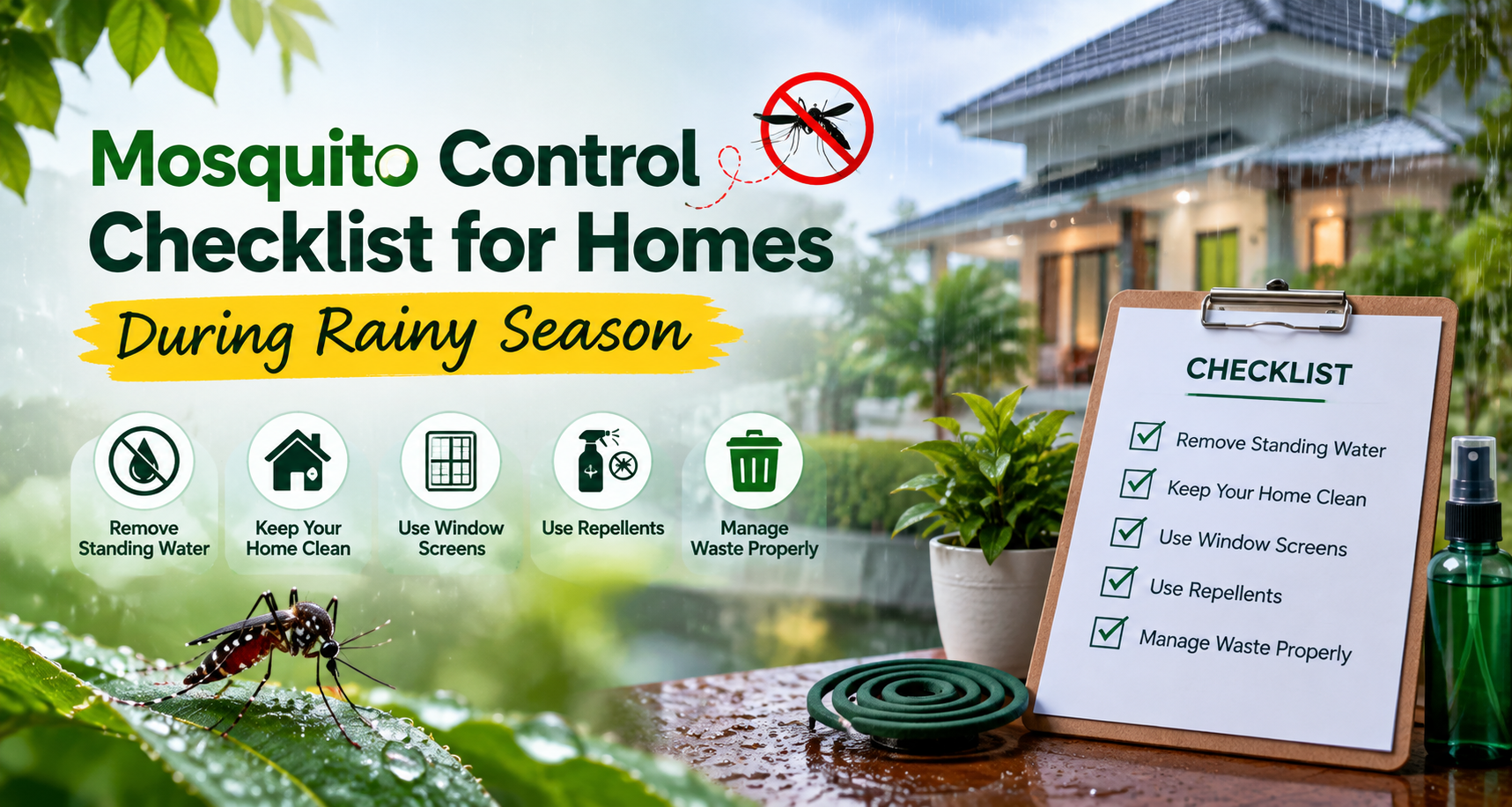
Rainy days can make your surroundings cooler and greener, but they can also create small pockets of water around your home that are easy to ignore. A bucket left outside, water collected under a plant pot, a blocked drain, or a covered corner on the terrace can become a mosquito-prone area.
The problem is not always the number of mosquitoes you can see inside the house. The real question is: where are they coming from?
If you live in Tirupati and notice more mosquitoes around your home during or after rainfall, use this practical rainy-season mosquito control checklist to inspect your property before the problem becomes difficult to manage.
Why Rainy Weather Can Bring More Mosquitoes Into Your Home
Mosquitoes need water during their breeding cycle. After rainfall, water can remain in many places around a residential property without being noticed.
For example:
- A plant pot may hold water underneath it.
- A discarded container may collect rainwater.
- A blocked drain may remain wet for several days.
- An unused tyre may hold water inside.
- A plastic sheet may form a small water pocket.
- A cooler or outdoor equipment may retain water.
You may clean your house every day and still have mosquitoes if these outdoor areas are not checked.
That is why effective mosquito control for homes should start with identifying possible breeding and resting areas around the entire property.
Your Rainy-Season Mosquito Inspection Checklist
Instead of checking only the rooms inside your house, walk around the complete property once or twice a week during the rainy season.
1. Start With the Front Entrance
Your home’s entrance is often overlooked during pest inspections.
Check:
- Plant containers
- Decorative pots
- Drainage corners
- Waste bins
- Water collected near the gate
- Items kept outside the main door
If you find water that has remained undisturbed, empty it and clean the container.
2. Check Every Plant Pot
You may not notice the water underneath a plant because the top of the soil looks dry.
Check the:
- Pot surface
- Saucer underneath the pot
- Decorative containers
- Balcony plants
- Terrace plants
- Garden containers
Do not allow water to remain unnecessarily in plant trays.
3. Inspect Your Balcony After Rain
Balconies can collect water around corners and near drainage outlets.
Look behind:
- Washing machines
- Storage boxes
- Plant stands
- Outdoor furniture
- Plastic covers
- Buckets and containers
A five-minute inspection after heavy rainfall can help you identify areas that normally go unnoticed.
4. Don’t Ignore the Terrace
The terrace is one of the first places you should inspect after rain.
Look for:
- Water around floor corners
- Blocked rainwater outlets
- Old containers
- Broken tiles
- Plastic sheets
- Construction materials
- Unused buckets
- Water collected near tanks
If water is not draining properly, find out why instead of repeatedly removing it manually.
5. Check Your Water Storage Areas
If your home uses drums, barrels, tanks, or other storage containers, make sure they are properly covered.
A cover should fit securely rather than simply resting loosely on top.
Also check the area around the tank. Sometimes the tank itself is covered but water collects around its base or nearby equipment.
6. Give Special Attention to Coolers
Water coolers can become an overlooked source of mosquito activity.
If you are not using a cooler regularly, do not leave water sitting inside it unnecessarily.
Clean and maintain the unit according to the manufacturer’s instructions and inspect the surrounding area for leakage or water accumulation.
7. Look Inside Old Tyres and Unused Items
Old tyres, bottles, boxes, cans and other discarded items can collect rainwater.
If these items are no longer required, remove them from the property.
If they must be stored, keep them in a way that prevents rainwater from collecting inside them.
8. Clear Small Drainage Problems Before They Become Bigger
You do not need a major drainage problem to create mosquito-friendly conditions.
A small blockage can slow water flow and leave moisture behind.
Check:
- Bathroom exterior drains
- Balcony outlets
- Terrace outlets
- Garden drains
- Side passages
- Water-discharge areas
If leaves, mud or waste are blocking the outlet, clean them carefully.
9. Check the Area Around Your Compound Wall
Mosquito problems do not always start inside your house.
Check the area immediately outside the compound wall for:
- Stagnant water
- Open drains
- Waste accumulation
- Overgrown vegetation
- Waterlogged corners
- Unused containers
If the source is outside your property, simply using a mosquito repellent indoors may not solve the underlying problem.
10. Inspect Less-Used Areas
Mosquito problems can develop in places that people rarely visit.
Include these areas in your inspection:
- Store rooms
- Backyards
- Empty portions of the property
- Staircase areas
- Garage corners
- Servant quarters
- Outdoor storage areas
- Areas behind sheds
A place that is rarely disturbed deserves more attention, not less.
11. Keep Windows and Doors Properly Protected
Once mosquitoes are active around the property, they can enter through open doors, windows and damaged mesh.
Check your mosquito screens for:
- Small holes
- Loose edges
- Damaged mesh
- Gaps around frames
Repair damaged screens and avoid leaving doors open for long periods, especially when mosquito activity is high.
12. Don’t Depend Only on Indoor Mosquito Solutions
Mosquito coils, repellents and other household products may help with mosquitoes you encounter indoors, but they do not necessarily address where the mosquitoes are originating.
Think of mosquito control in two parts:
Inside the house: reduce mosquito entry and exposure.
Outside the house: identify conditions that allow mosquitoes to breed or remain active.
Both areas need attention for better overall control.
A Simple 15-Minute Mosquito Check
If you don’t have much time, use this quick routine after rainfall.
Around the House
- Check all plant pots and trays for collected water.
- Empty unnecessary buckets, bottles, cans, and containers.
- Inspect the balcony for stagnant water.
- Check the terrace for water accumulation after rain.
- Inspect the area around water tanks and storage containers.
- Check air coolers and remove unnecessary standing water.
- Clean and inspect drains for blockages.
- Check old tyres and other unused items that can collect rainwater.
- Remove stagnant water from all accessible areas.
- Inspect the backyard, garden, and less-used outdoor spaces.
Before Finishing
- Check the area around the compound wall for stagnant water.
- Inspect window and door screens for holes or damage.
- Check unused storage areas, sheds, and corners.
- Make sure all water-storage containers are properly covered.
This small routine can help you identify mosquito-prone spots before they become a recurring household problem.
What If Mosquitoes Keep Coming Back?
Sometimes homeowners remove visible standing water but still notice mosquitoes every evening.
This can happen when the actual source is:
- Difficult to identify
- Outside the immediate house
- In a hidden drainage area
- In an inaccessible water-collection point
- Around vegetation or shaded areas
- Related to recurring water accumulation
In such situations, repeatedly using household repellents may not address the source.
A professional mosquito control service in Tirupati can inspect the property and identify areas that require attention.
When Should You Consider Professional Mosquito Control?
Consider professional help if you notice a recurring mosquito problem despite regular cleaning.
Professional pest control in Tirupati may be useful when:
- Mosquitoes are present every evening
- The problem returns soon after rainfall
- You cannot identify the breeding source
- Your property has large outdoor areas
- There are recurring drainage or waterlogging issues
- Mosquito activity is affecting the use of balconies, gardens or outdoor spaces
- Regular household measures are not giving satisfactory results
The treatment approach should depend on the property, mosquito activity and potential source areas rather than applying the same solution everywhere.
What Can Homeowners Do Before a Pest Control Visit?
If you have scheduled mosquito control in Tirupati, make the property easier to inspect.
Before the technician arrives:
- Remove unnecessary objects from outdoor areas.
- Empty containers holding water.
- Keep access to terrace and backyard areas clear.
- Inform the technician about locations where mosquitoes are most noticeable.
- Mention any recurring waterlogging or drainage problems.
- Follow the technician’s preparation and safety instructions.
This can make it easier to identify problem areas and plan the appropriate treatment.
Why Regular Prevention Matters During the Rainy Season
Mosquito control should not begin only after mosquitoes become a daily nuisance.
Rain can repeatedly create new water-collection points. That means an area that was dry during one inspection may become a problem after the next rainfall.
A better approach is simple:
Rain → inspect → remove standing water → check again.
Making this a regular habit can reduce the chances of mosquito-friendly conditions developing around your property.
Mosquito Control for Homes in Tirupati
For homeowners in Tirupati, mosquito control is not just about treating the rooms where mosquitoes are visible. The surrounding property, drainage points, water-storage areas and outdoor spaces also deserve attention.
If mosquitoes continue to be a problem after basic preventive measures, Chinnu Pest Control can help assess the situation and recommend suitable pest-control support for your property.
The goal should be more than simply reducing the mosquitoes you see for a short period. Identifying the conditions that support mosquito activity is an important part of a practical mosquito-management approach.
Frequently Asked Questions
How can I control mosquitoes at home during the rainy season?
Start by checking your entire property for stagnant water. Inspect plant pots, balconies, terraces, drains, coolers, containers, tyres and water-storage areas. Repeat the inspection after heavy rainfall because new water-collection points can appear.
Why are mosquitoes increasing around my house after rain?
Rain can leave water in small containers, blocked drains, plant trays, outdoor materials and other areas. These water-collection points can contribute to mosquito breeding and increased activity around your property.
How often should I check for mosquito breeding areas?
During the rainy season, inspect your property regularly and especially after heavy rainfall. A short weekly inspection can help identify new water-collection points before they become recurring problems.
Can I control mosquitoes without professional pest control?
Basic prevention can make a significant difference when the source is visible and manageable. However, if mosquitoes continue to appear despite removing stagnant water and improving drainage, professional mosquito control services in Tirupati may be worth considering.
Does mosquito control only mean fogging?
Not necessarily. The appropriate approach depends on the property and the source of mosquito activity. Inspection, source reduction and targeted treatment can all form part of a mosquito-control plan.
Why do mosquitoes keep returning after I remove standing water?
There may be another source nearby that you have not identified. It could be an outdoor drainage area, neighbouring water collection point, hidden container or another location that repeatedly becomes wet after rainfall.
Final Takeaway
A mosquito problem often starts with something very small: a little water that nobody noticed.
During the rainy season, make mosquito inspection part of your normal home-maintenance routine. Check the terrace, balcony, garden, drains, plant pots, coolers, water containers and outdoor areas regularly.
If the problem continues even after taking preventive steps, professional mosquito control in Tirupati can help identify and manage persistent mosquito activity.
For mosquito and other pest-control requirements, Chinnu Pest Control can assist with a suitable solution based on your property’s specific needs.